
Estate Planning
Comprehensive Estate Planning Services to Protect Your Legacy
Table of Contents
Frequently Asked Questions About Estate Planning
What happens if I die without a Will in place?
If you die without a Will, your assets by law will be divided among your surviving heirs at law. If you are married and have no children, all of your probate assets will go to your surviving spouse. If you have children, all of your probate assets will be equally divided among your surviving children. If you are married and have surviving children, one half of your probate estate will go to your surviving spouse and one half divided among your surviving children.
What happens if I become incapacitated and am unable to tend to my financial affairs? Who can pay my bills for me?
If you are incapacitated and unable to handle your own affairs and you do not have a Power of Attorney in place, this can be problematic. Banks will not allow any person to manage your finances because you said it was okay for that to happen. You must have a recorded Power of Attorney on file for any institution to allow your agent access to your accounts or to any other financial records to pay bills. If you do not have a Power of Attorney in place, your family may be required to file for an emergency Conservatorship on your behalf. This requires court intervention and the certification of a physician to the court that you are incapacitated. While it is a solution to your situation, it is time consuming and can be very costly.
What does the probate process for a Will entail?
Upon your passing, your original Will must be located to file it, along with some other court forms and your death certificate with the Probate Court. Some Probate Courts require additional documentation to be filed to open an Estate. There are intermittent forms and filing fees required depending upon the size of your estate that must be paid. There is a creditor’s claim period that runs for one year from the date of death and another claim period for eight months from the opening of your Estate. Once all creditor claims have been settled and after the requisite period has surpassed, the Estate is ready to close, and the assets distributed to beneficiaries. You can typically expect at least a year or longer for an Estate to remain open, depending upon different facts and circumstances.

What Is Estate Planning?
Estate planning is a wholesale approach to ensuring your affairs during life and at death are in order. It ensures that should something happen to you and you are unable to handle your own affairs, someone competent and who you trust can stand in for you to administer your assets and income to protect you and your loved ones. Someone can also be appointed by you to make your healthcare decisions should you be unable to do so.
Key Components of an Estate Plan
Wills
A Will is a document that disposes of your assets at death and names specific beneficiaries who will receive your assets at death. It can also discuss disposal of your remains at your death should you not have other arrangements in place.
There are certain requirements in South Carolina to have a valid will, such as two independent witnesses who sign your will, and a self-attestation clause indicating that you have voluntarily executed your will, and finally that you are competent to execute your will. If these requirements are not met, your will could be deemed invalid.
Your will can be as detailed as you want or as generic as you want. But it is the only method to dispose of your assets at death other than a Trust.
Trusts
A Trust is a tool designed to provide the Settlor, or the person creating the Trust, some control of how assets are distributed upon death. A Trustee retains all Trust property at death and must follow the instructions set out in the Trust document as to how assets are to be distributed.
If there are concerns about certain beneficiary’s age or history that you do not believe they will be able to appropriately manage money, a Trust is a way to ensure that your assets are protected from waste or other creditors.
The terms of the trust control as to how long the trust remains in place, as well as how and when your beneficiaries receive any distributions from your trust.
Power of Attorney
A Power of Attorney is a document executed and used by you during life in which you appoint someone to handle your financial affairs should you be unable to do so yourself. The document is valid upon being recorded with the Register of Deeds Office and can be used to transaction business on your behalf.
There are different types of Powers of Attorney, but the typical document is a Durable Power of Attorney. Durable means that it extends beyond a person’s incapacity, meaning it can be used even if you are incompetent to transaction business on your behalf.
This document is presented to banks and other institutions to be able to obtain access to accounts to pay bills or other business. If you do not have this in place, and unless you have a joint account with someone, there is no other way to access your bank accounts which means your bills could go unpaid during the period you are incapacitated.
This document terminates at death, meaning it cannot be used after your death.
Healthcare Directives
A Healthcare Power of Attorney is another type of Power of Attorney, only that this document specifically deals with healthcare decision-making should you be incapacitated. It allows your agent to speak with your doctors and have access to your medical records so that your agent can make informed decisions about your care.
In South Carolina, this document has provisions for life support, artificial nutrition, and whether you grant your agent the discretion to donate your organs prior to death.
Like the Durable Power of Attorney, this document terminates at death.
Beneficiary Designations
For assets that are not subject to disposition by your will, it is important that you list a proper beneficiary designation so that your asset goes to the correct person. Typical assets that have beneficiary designations are life insurance policies or retirement or investment accounts.
If you fail to name a beneficiary for any of these assets, typically these assets will be distributed to your estate and distributed in accordance with your will.
As part of your overall estate plan, it is a good idea to ensure that you have designated the rightful beneficiaries of those assets that require them.
Why Estate Planning Is Important
Planning is important to have peace of mind at death. You work hard to provide for your families and children. Why not ensure that your assets are given to those you want to receive them at your death? Oftentimes, many people die without a will which means that one-half of their estate will be distributed to a surviving spouse, and the other half to the surviving biological or adopted children. But what happens if you do not want a child of yours to receive from your estate? The only way to ensure that your assets go to who you want to receive, is through a will.
There have been times also where estate assets are insufficient to pay all debts or taxes owed at death, and the family is left to pay for funeral expenses which can be in the tens of thousands of dollars. It is best to plan for uncertainties by having a preneed funeral contract in place to ensure that your funeral expenses are paid for in advance and relieving your family of this burden financially.
Finally, if you do not have directives in place during your life, such as a Power of Attorney, the bank is not going to allow anyone access to your accounts simply because they are your family or your friend. You must have a written legal directive in place that a financial institution can rely on to allow your agent to access your account to pay your bills. Without that, the consequences can be catastrophic.
Common Estate Planning Challenges
Probate Avoidance
Probating of an estate means that there are assets that require the court to administer because they do not have a beneficiary designation and must be distributed by will. If you do not have a will and you own assets at death, your estate still must be probated to distribute your assets to rightful beneficiaries.
Your will be filed with the court along with certain forms to open an estate. There are filing fees associated with opening your estate, together with other fees based on the total amount of assets in your estate.
A creditor’s claim period runs for a period of eight months after the estate is opened for certain creditors and up to one year from the date of death for other creditors.
Once the creditor claim period runs, the estate can be closed after all assets are distributed. This process can take up to a year or so before estate assets can be distributed to beneficiaries.
Some people want to avoid the probate process altogether or for privacy reasons. This can be done by either designating certain assets to be titled jointly with your beneficiaries or through a trust.
Blended Families and Complex Situations
If you have been married more than once and you and your spouse each have children from previous marriages, it may be important to you to protect your assets from your spouse’s children (your stepchildren) to ensure that only your own children receive from your estate. At the same time, you may want to ensure your current spouse receives from your estate when you pass.
This can be accomplished through an appropriate will or trust, however, if you have concerns about undue pressure being placed on your spouse for your assets at death, then a trust might be a better mechanism to ensure your assets go to your spouse alone and free from pressure by your spouse’s children.
These documents are helpful in planning for blended family scenarios.
Ready to get started?
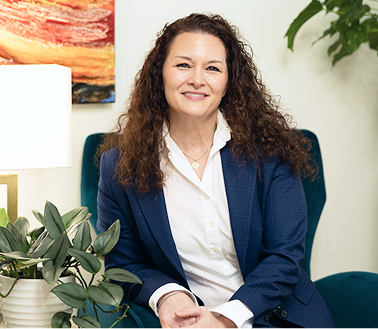
My late father, Jan Warner, was an accomplished and widely known family law attorney and nationally syndicated author in South Carolina, so this area of law runs in my blood. It is all I have ever known, and I cannot imagine doing anything else.